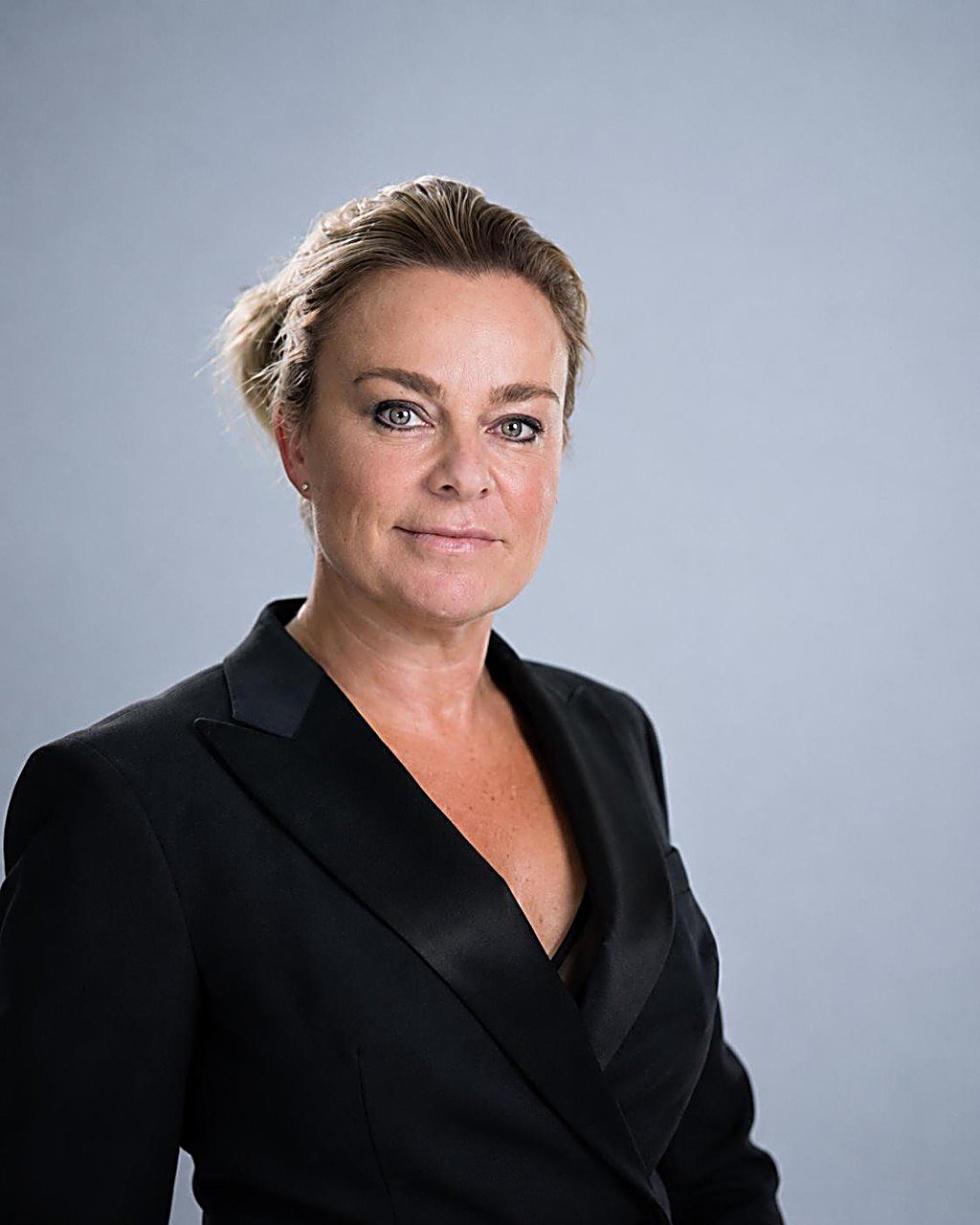
In Bright Leadership Reflections, we ask leaders who are helping to shape what comes next to pause and consider what leadership truly demands today. Their choices, their insights, their doubts. This time we spoke with Lena Olivier.
What is the essence of leadership talent, and how do you recognise it?
For me, the essence lies in the ability to give direction and to set people in motion. Not through power or position, but through conviction, trust and responsibility. I recognise it in people who look beyond their own role: who see patterns, dare to ask the hard questions, and make others stronger. From LinkedIn and Salesforce to VusionGroup, I have seen that real leaders steer not only on results, but also on culture and meaning.
The best leaders build not dependence, but maturity.
What is the challenge leaders genuinely need to prepare for in the coming years?
Leading in a world where nothing can be taken for granted any more. Technology, AI, geopolitics and polarisation are changing the playing field fundamentally. Control is no longer the answer; what matters is agility, moral courage and the ability to hold direction while reality keeps shifting. For supervisory directors, this means governance is not only about compliance, but about the wider question: are we also doing the right things for the world of tomorrow?
What should leaders stop doing, because it no longer works?
Thinking you have to know, solve or control everything yourself. The era of hierarchical leadership, in which the leader holds all the answers, is over. We also need to stop confusing short-term success with lasting impact, and pushing vulnerability aside. It is precisely in acknowledging uncertainty that trust is born. People do not follow perfect leaders; they follow leaders who are sincere.
Which leadership choice has made you and your team visibly stronger?
The choice to build trust, ownership and connection. At LinkedIn, Salesforce and VusionGroup I have grown teams in environments where change was the constant. That takes clarity, but also humanity. My work in society has deepened my leadership too. After the murder of my sister Miranda, I came to look differently at systems, responsibility and safety; as chair of the Federation of Surviving Relatives of Violent Crime, I experienced how important it is that leaders dare to act when systems fall short.
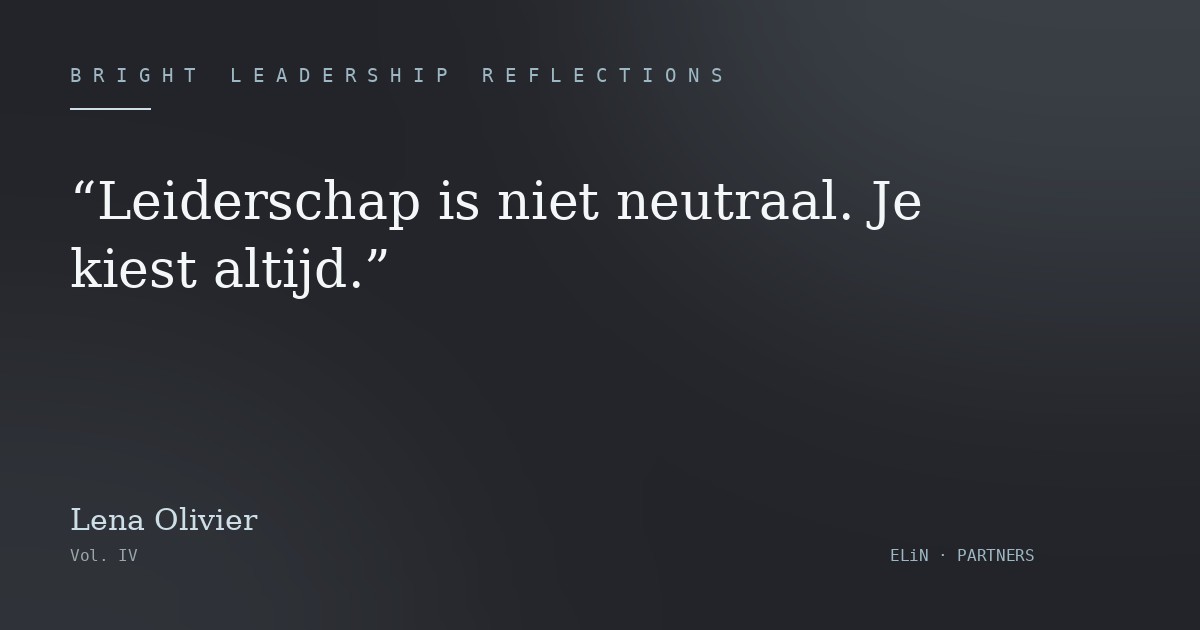
Leadership is not neutral. You always choose.
Which quality in other leaders genuinely gives you energy?
Leaders with courage, warmth and vision. People who stand for something and at the same time stay open to others, and who are not afraid of the uncomfortable conversation. I also draw energy from leaders who want to connect generations: who do not hold on to their experience as a possession, but pass it on as a responsibility.
Which way of leading suits you less well?
Leadership that revolves mainly around control, position or internal politics suits me less, because it comes at the cost of speed, creativity and ownership. Organisations grow stronger when leaders make room, bring people with them and are clear about the intent. Future-proof leadership does not steer on today alone; it builds carefully toward tomorrow.
Which leadership quality is structurally underestimated?
Moral courage. The courage to do the right thing, even when it is uncomfortable or unpopular. It means taking responsibility beyond your own interest, and daring to act when systems do not protect people enough. Leadership is not neutral: you always choose, between looking away or taking responsibility, between control or trust.
Which insight about people do you wish you had understood ten years earlier?
That people do not only want to be led, they want to be seen. Behind every professional is a human being with a story, with loss, ambition and hope. Change only becomes possible when people feel acknowledged, not only in what they do, but in who they are. Perhaps ten years earlier I would have wanted to understand that leadership is not about pushing harder, but about listening better.
Bright Leadership, according to Lena.
Bright Leadership is leadership that gives direction, strengthens people and takes responsibility for the future. Leadership with a moral compass, that looks not only at growth or position, but also at meaning and impact on society. As a leader you occupy a place for a while, but your responsibility reaches further than yourself. What do you pass on? Who do you let grow? What movement do you set in motion?
Future-proof governance begins not with appointing, but with deliberate building.